News

Belgium gets its first UNESCO Biosphere Area with GrensPark KempenBroek
Today, the International Coordinating Council for UNESCO's Human and Biosphere Program in Agadir (Morocco) decided to recognize KempenBroek as a transboundary Biosphere Area. This makes the KempenBroek the first cross-border UNESCO Biosphere Area in the Benelux, the first in Belgium and the second in the Netherlands.
Big party in the KempenBroek GrensPark, both provinces of Limburg, Noord-Brabant and in the Kempen and Maasland Regional Landscape.
An international network and a “strong brand”
The UNESCO Human and Biosphere Program was established in 1971. It focuses on the relationship between people and their living environment. It translates the principles of sustainable development into a local context and thus makes the connection between science, society and policy. Putting sustainable development into practice is done by all stakeholders: from local governments, residents and companies to schools, knowledge institutions and NGOs.
Globally, there are 748 biosphere areas in 134 countries (2023) that serve as icons for sustainable development. Only 23 have crossed borders, with KempenBroek now ranked 24th. Until now, Belgium had no Biosphere Area; in 2018, the Maasheggen became the first UNESCO Biosphere Area in the Netherlands.
Het KempenBroek immediately becomes a “strong brand” as part of the UNESCO World Network of Biosphere Reserves, a dynamic and interactive network of areas that promote harmony between people and nature for sustainable development through participatory dialogue; sharing knowledge; combating poverty and improving human well-being; respect for cultural values and society's ability to deal with change.
A new jewel in the crown
The Kempen and Maasland Regional Landscape is once again the driving force behind this recognition. With the Hoge Kempen National Park, the Meuse Valley River Park and now the KempenBroek Border Park, another international standard is being set in the field of nature, heritage and landscape development with strong social support and a great socio-economic return.
The KempenBroek GrensPark is a unique, natural and high-quality mosaic landscape and is located at the crossroads of the two provinces of Limburg and Noord-Brabant, where the Kempen and Maasland Regional Landscape has worked with many partners for 24 years, including all Flemish and Dutch municipalities (Bree, Bocholt, Maaseik, Kinrooi, Weert, Nederweert and Cranendonck) and the provinces of Limburg (B), Limburg (NL) and Noord-Brabant (NL).
Eight years ago, in 2016, the application process was started at the request of the provinces and municipalities of which the KempenBroek is part. In order to prepare this application in terms of content, a master plan was drawn up with the partners to develop the region sustainably. The application was submitted by the Flemish and Dutch UNESCO Committees on September 29, 2023.
There is an enthusiastic response in both the Netherlands and Flanders. The municipality of Weert already received recognition as the greenest region in the world in 2014 [1], partly because of its investments in KempenBroek. After two national parks (Hoge Kempen and Bosland) and three landscape parks (RivierPark Maasvallei, Hart van Haspengouw and Grenzeloos Bocagelandschap), the province of Belgian Limburg gets a new jewel in the crown with this UNESCO recognition.
Ignace Schops, director of the Kempen and Maasland Regional Landscape: “This recognition is not only very important for protecting nature, landscape, heritage and agriculture. UNESCO is also a very strong brand in marketing terms. The baker and the butcher; the hotel owner or the café owner; the farmer and the conservationist; the mayor and the entrepreneur... the entire local community benefits from this UNESCO recognition. In short, this is a compliment to everyone for years of support and faith! And what I find so powerful is that UNESCO recognition has no direct authority, but it does have status and is highly regarded by the general public. I am counting on the Flemish and Dutch governments to also want to invest financially in this recognition.”
“With the recognition of KempenBroek as a UNESCO Biosphere Area, the Kempen and Maasland Regional Landscape and the province of Limburg are setting another milestone in Flanders and the Netherlands in terms of area-based cooperation. This shows once again that the protection of nature and the landscape can go hand in hand with sustainable socio-economic development,” says Bert Lambrechts, Deputy for Environment and Nature and Chairman of the Kempen and Maasland Regional Landscape.
What does it mean?
Biosphere areas are areas where local communities work together to create a positive, sustainable future for themselves and their region — say their part of the biosphere, the thin layer of our planet where life is possible. A characteristic feature of Biosphere Regions is that they are dynamic: innovative methods for protecting biodiversity go hand in hand with socio-economic development. It is therefore about the sustainable development of an area, and also has a scientific character, with research and educational activities as important pillars.
It is typical that the areas do not work “top-down” by a central government, but that they form a lively partnership between local governments, residents, companies, schools, knowledge institutions, and NGOs.
A Biosphere Area must have important natural and cultural values and include a few protected areas. The area must be representative of a type of landscape and/or marine area so that the results of the Biosphere Project can be used elsewhere. Biosphere areas can consist of both natural and cultural landscapes. Pure nature or wilderness is not a necessity.
No additional rules
UNESCO has no legislative powers and recognition as a Biosphere Region therefore does not lead to additional policy or protection of the entire area. UNESCO expects Biosphere Regions to achieve their goals, not by creating additional legislation or imposing restrictions, but through active dialogue between the various regional holders. Moreover, nothing changes the rights of citizens to their property.
Het KempenBroek, best kept secret in the Netherlands and Flanders!
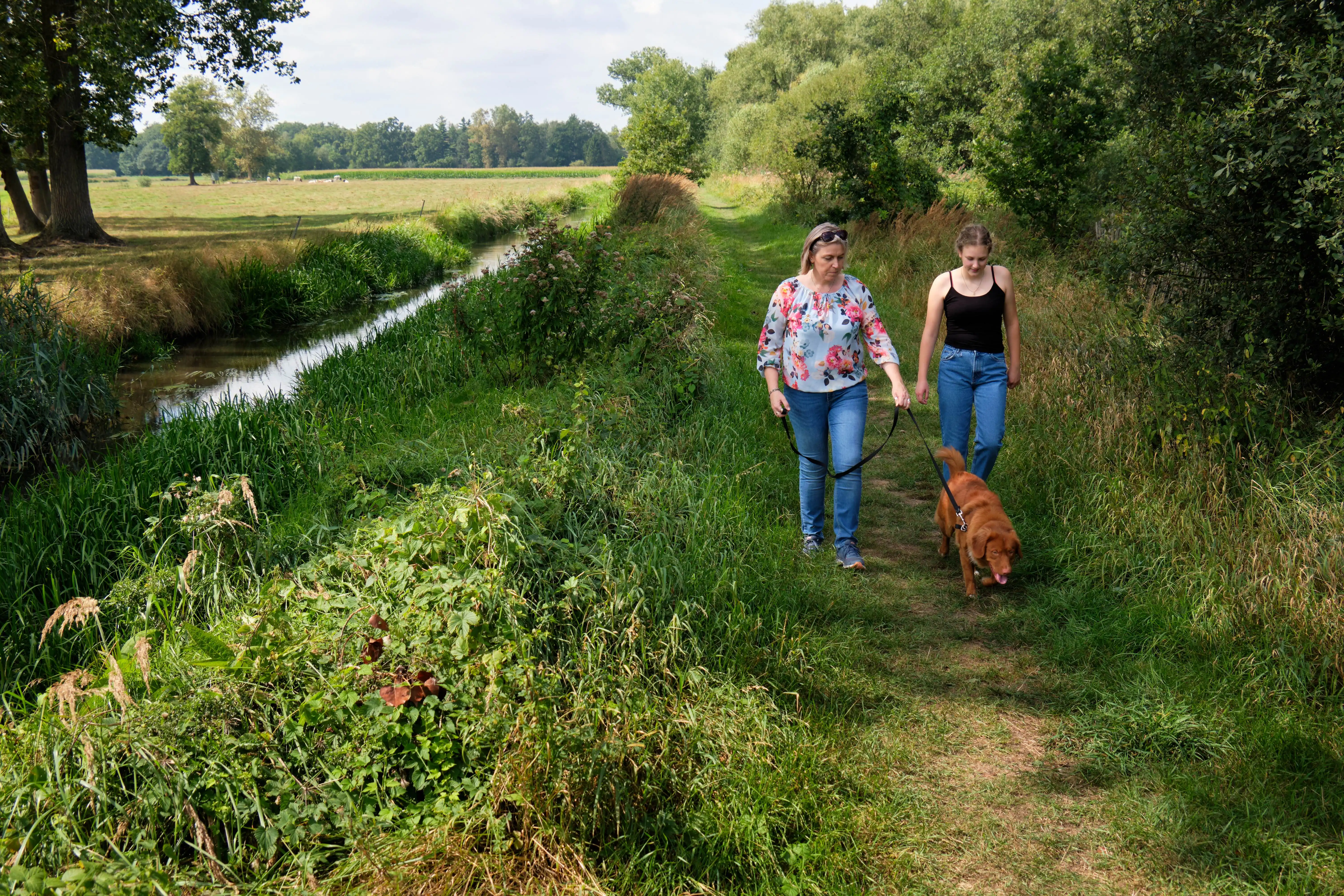
Due to the centuries of interaction between people and nature, the KempenBroek consists of a particularly varied landscape where wet and swampy areas alternate with dry sandy ridges. It is a true mosaic of landscapes with swamps, stream valleys, fens, forests, heathland and agricultural areas. The villages and a few cities are also scattered in or on the edge of the area on the higher grounds and are now home to a total of around 75,000 inhabitants.
This landscape diversity is reflected in a rich biodiversity and the area plays an important role in preserving habitats and species in Flanders and the Netherlands. The area even plays an essential role in preserving some species!
Economically, the area, both the Flemish and Dutch parts, is an important agricultural area that is responsible for food production. In recent years, the importance of tourism as part of a sustainable rural economy has increased significantly.
For centuries, man drew borders on the canvas of the area, most recently in 1839 when it became a border region between Belgium and the Netherlands. Traces of this ancient border past and present in the form of border posts, defense systems, etc. are legible in the landscape or are part of the common oral heritage.
It's an area with a quiet, humble history. In this region on the edge of the Kempen, the food supply on poor soil has forced a daily fight for life for centuries. A rich cultural history therefore does not translate into flashy cathedrals or monuments, but into functional buildings such as the many wind and water mills. A rich culinary tradition and (traditional) festivities are living witnesses to the resilience of the people who enjoyed life despite their daily work.
[1] https://www.metonsinweert.nl/nl/toeristengids/item/245195954/weert-groenste-regio-wereld